








Training new staff faster with a knowledge base
21st August 2026
Bringing new employees into a business is exciting, but getting them up to speed can be time-consuming. From learning company processes and understanding internal systems to finding answers to everyday questions, new starters often need a lot of support during their first few weeks. A well-organised Knowledge Base can make staff training faster, easier and more consistent by giving employees instant access to the information they need, whenever they need it.
In this blog, we’ll explain what a knowledge base is and how it can make it easier for you to train new staff.
What is a Knowledge Base?
A Knowledge Base is an online store of information designed to help people quickly find answers to common questions. Businesses use Knowledge Bases for staff handbooks, internal training, customer support resources and company documentation.
Unlike traditional documents that can become outdated or difficult to search through, a Knowledge Base provides a structured, easy-to-use platform where information can be organised into categories and accessed from any device.
You can learn more in our guide here: What Is a Knowledge Base System?
Why use a Knowledge Base for employee training?
Traditional staff training often depends on shadowing colleagues, attending meetings and reading through large documents. While these methods can still be valuable, they can slow down the onboarding process and create inconsistencies.
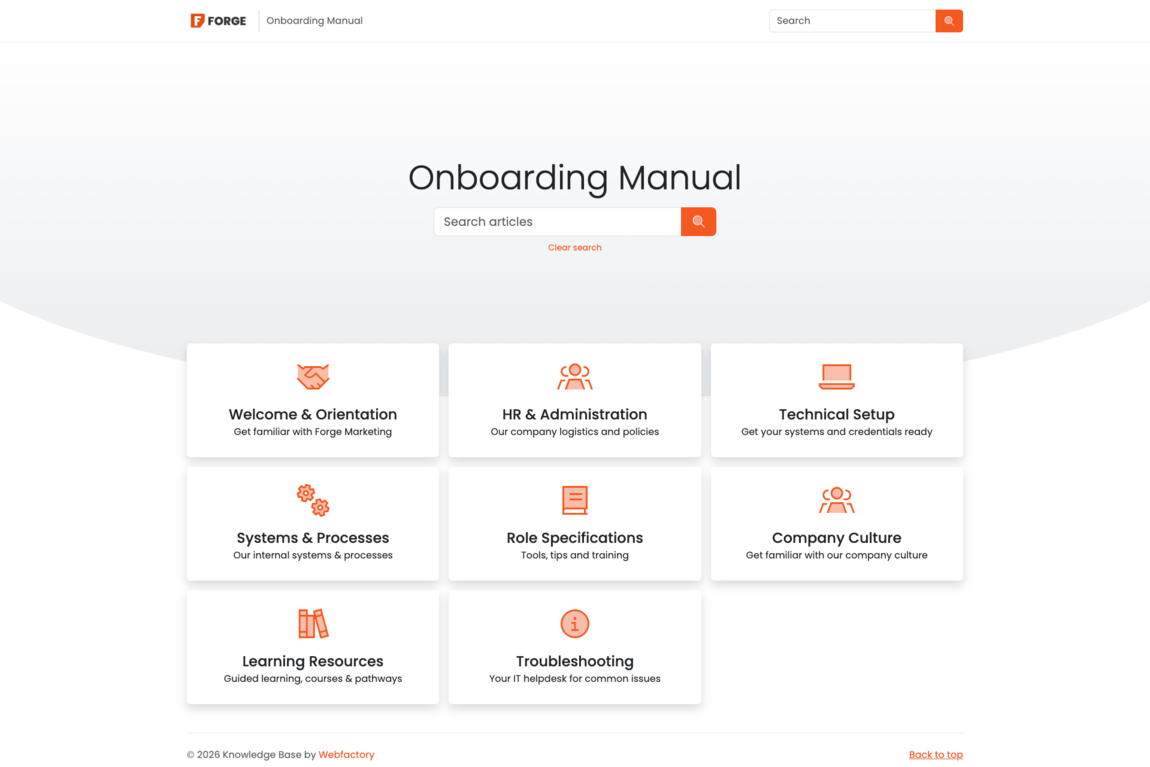
An onboarding Knowledge Base gives new employees a reliable source of information from their first day.
1. Give new starters instant access to information
New employees naturally have lots of questions:
- How do we complete this task?
- Who is responsible for this process?
- Where can I find this document?
- What steps should I follow?
A Knowledge Base allows employees to search for answers themselves instead of waiting for someone else to become available. This helps new team members feel more confident and independent while reducing interruptions for managers and colleagues.
2. Create consistent training across your team
When different people train new employees, important details can sometimes be missed or explained differently. A Knowledge Base ensures everyone receives the same information, whether they join today or six months from now. You can create step-by-step guides, company policies, FAQs and process documents that reflect the way your business works.
3. Reduce the time managers spend answering questions
Managers often spend a large amount of time repeating the same explanations to new staff. By documenting common questions and processes in a Knowledge Base, employees can find answers quickly without needing to ask every time. This gives managers more time to focus on higher-value tasks while still supporting their team.
4. Make training easier to update
Businesses change constantly. New software is introduced, processes improve, and company policies evolve. With a digital Knowledge Base, updates can be made quickly, ensuring employees always have access to the latest information. This is much more efficient than updating printed handbooks or searching through multiple files and folders.
What should you include in a staff training Knowledge Base?
A useful employee Knowledge Base should include the information your team needs most often. Some examples include:
Company information
- Company values and culture
- Team introductions
- Workplace policies
- Benefits and employee information
Role-specific guides
- Job responsibilities
- Step-by-step processes
- Software instructions
- Common tasks and workflows
Frequently asked questions
- Common new starter questions
- Troubleshooting guides
- Internal procedures
Training resources
- Videos
- Tutorials
- Checklists
- Helpful documents
The key is to organise information clearly so employees can quickly find what they need.
How a Knowledge Base improves employee onboarding
A good onboarding experience helps new employees settle in faster and feel supported from the beginning. A Knowledge Base can become a central part of your onboarding process by providing a simple place for new starters to learn about your business.
For example, a new employee could:
- Read through a welcome guide before their first day.
- Learn about company systems and processes.
- Follow role-specific training guides.
- Search for answers as they complete tasks.
- Continue using the Knowledge Base as a long-term reference.
This creates a smoother onboarding experience while helping employees become productive sooner.
Common mistakes when creating a staff Knowledge Base
While a Knowledge Base can transform employee training, it is important to avoid common mistakes. Some businesses create too much information without organising it properly, making it difficult for employees to find answers. Others create a Knowledge Base but fail to keep content updated, meaning staff lose trust in the information provided.
A successful Knowledge Base should be:
- Easy to search
- Regularly updated
- Clearly organised
- Written with employees in mind
Summary
A Knowledge Base can transform the way businesses train and support new employees by providing a central place for important information, processes and resources. Instead of relying on repeated explanations or scattered documents, teams can give new starters instant access to the answers they need.
By improving onboarding, keeping information consistent and reducing the time managers spend answering common questions, a Knowledge Base helps employees become confident and productive faster.
Whether you are creating a digital staff handbook, internal training hub or company resource centre, Webfactory Knowledge Base makes it simple to organise and share your business knowledge in one easy-to-access place.